
Where to Put the Bench: Hiroshi Sugimoto Frames a Hillside

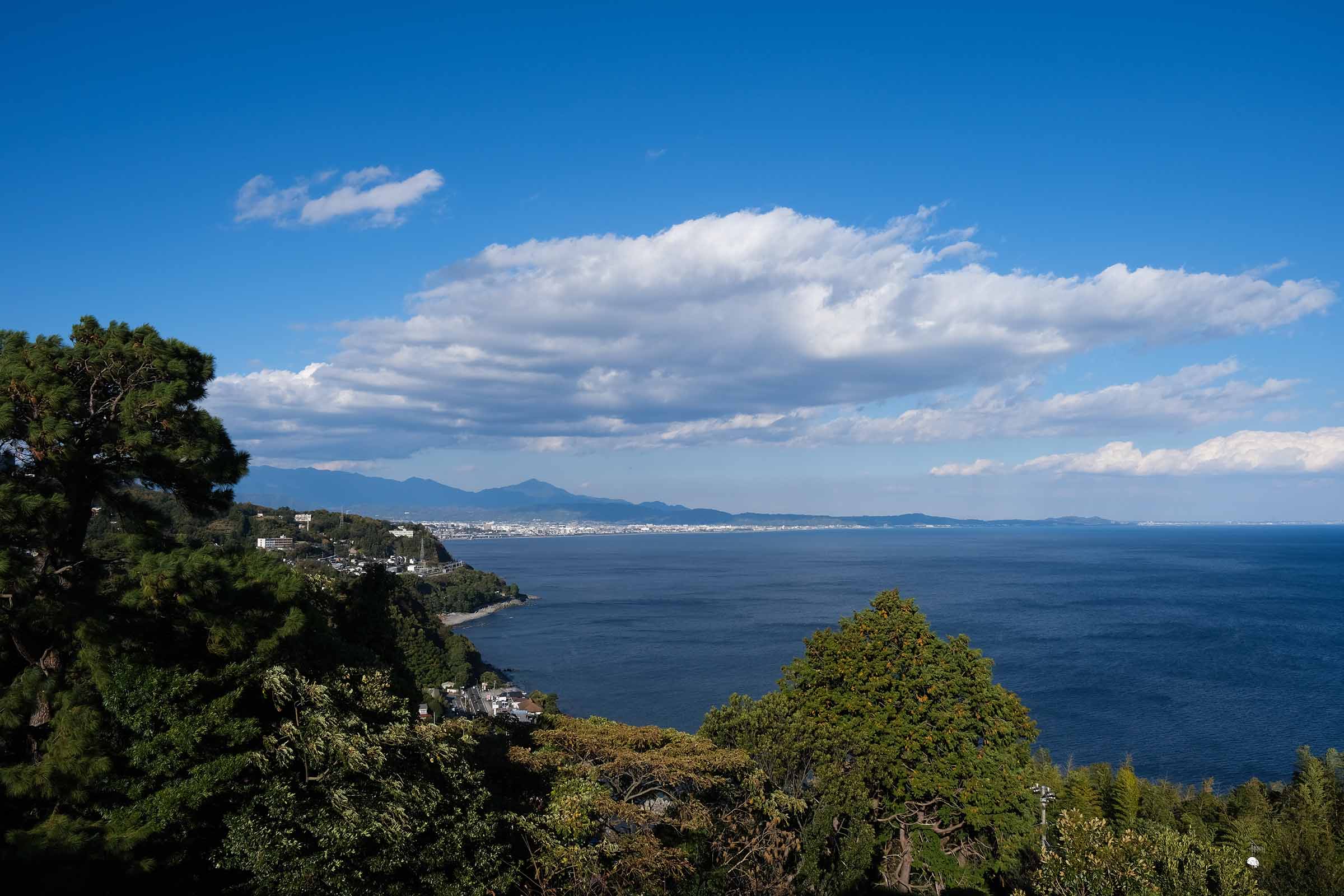
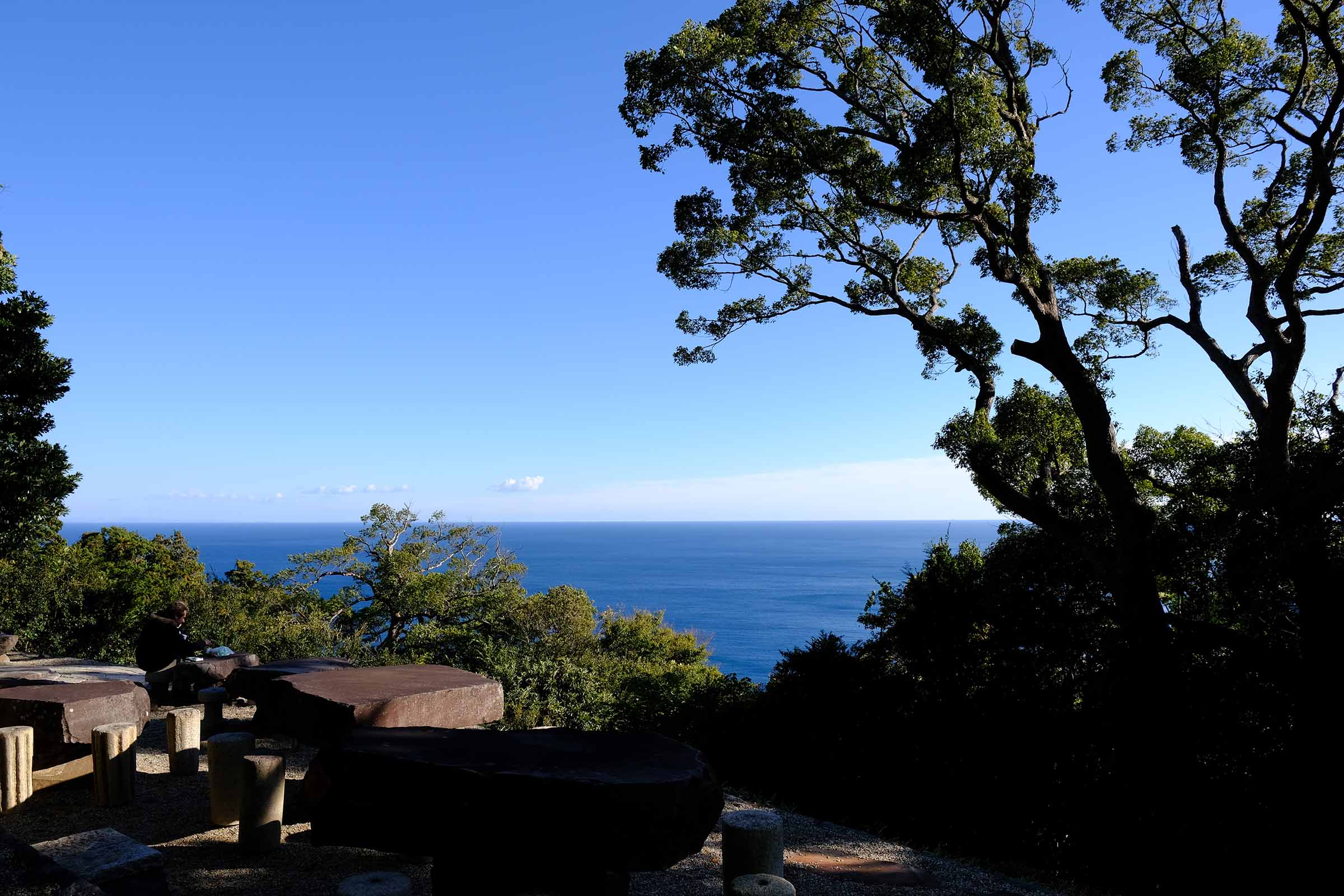
It’s a gorgeous late autumn day in 2023 when I visit Enoura Observatory in Odawara, Japan. Created by Hiroshi Sugimoto, it spreads over 60,000 square metres of hillside above Sagami Bay. The site is packed with natural and human-made things, none of them there by accident. Benches are laid out throughout. A few point out to sea; others are aimed at sights that look entirely ordinary. It’s not until I sit on one facing a bamboo grove, with a hint of ocean blue off to the right, that I understand what’s going on. From my journal notes:
The space follows Hiroshi Sugimoto’s rules. He did what he wanted, mixing pieces from different places and eras and with a keen attention to views. You can tell he’s a photographer. From time to time I would encounter a bench in an unassuming place and when I sat down it was always “ah! I get it”.
I probably first encountered Sugimoto’s photography on the cover of U2’s 2009 album ‘No Line on the Horizon’. My favourites are his series of seascapes (like the one used by U2) and empty theatres. But to define him just as a photographer is limiting. Over the last five decades, Sugimoto has also created sculptures governed by mathematical equations, theatre performances, installations and architecture, despite not being a licensed architect. I’m also smitten by his devout tea practice and design of tea rooms, like the ‘Glass Tea House Mondrian’ installed in Venice between June 2014 and November 2016.
I briefly met Sugimoto at the inauguration of his retrospective exhibition in London’s Hayward Gallery in October 2023, just before I flew to Japan for a month-long trip. There’s one thing he said regarding the development in Odawara that has lingered in my mind since, and that is “Art breeds art, money breeds problems; I want to use up all my money before I die.” Naturally, after such a passionate statement, I had to visit Enoura Observatory.
Seeing all his work collected in one place in London made me realise that there’s one clear thread connecting all the disciplines he’s engaged with, and that’s the same insight I had while sitting on that bench a few weeks later: spot-on framing. Sugimoto’s defining craft is that of carefully creating scenes that evoke emotions and reflection by playing with the notion of time.
Ask the stone where it wants to be
Enoura was inaugurated in 2017. Its design was inspired by the ‘Sakuteiki’ (Records of Garden Making), written a thousand years ago during the Heian period by Tachibana no Toshitsuna. The treatise opens with ishi wo taten koto (石をたてん事), which can be translated as ‘matters of setting stones’. It advises following ‘the request of the stone’ when deciding where to place them. Sugimoto, who has declared a ‘stone fetish’, took this to heart when placing his large collection of old stones. The other key principles from the ‘Sakuteiki’ include the creation of vignettes inspired by the natural world, Chinese geomantic forces (some later known as feng shui), Buddhist references and, most importantly, taboos to be avoided.
Regarding the placement of stones there are many taboos. If so much as one of these taboos is violated, the master of the household will fall ill and eventually die, and his land will fall into desolation and become the abode of devils. — ‘Sakuteiki’, chapter 10. Translation by Jirō Takei and Marc P. Keane.
The ‘Sakuteiki’ might have been the starting point, but Sugimoto followed his own sensitivity, combining traditional and contemporary styles and techniques.
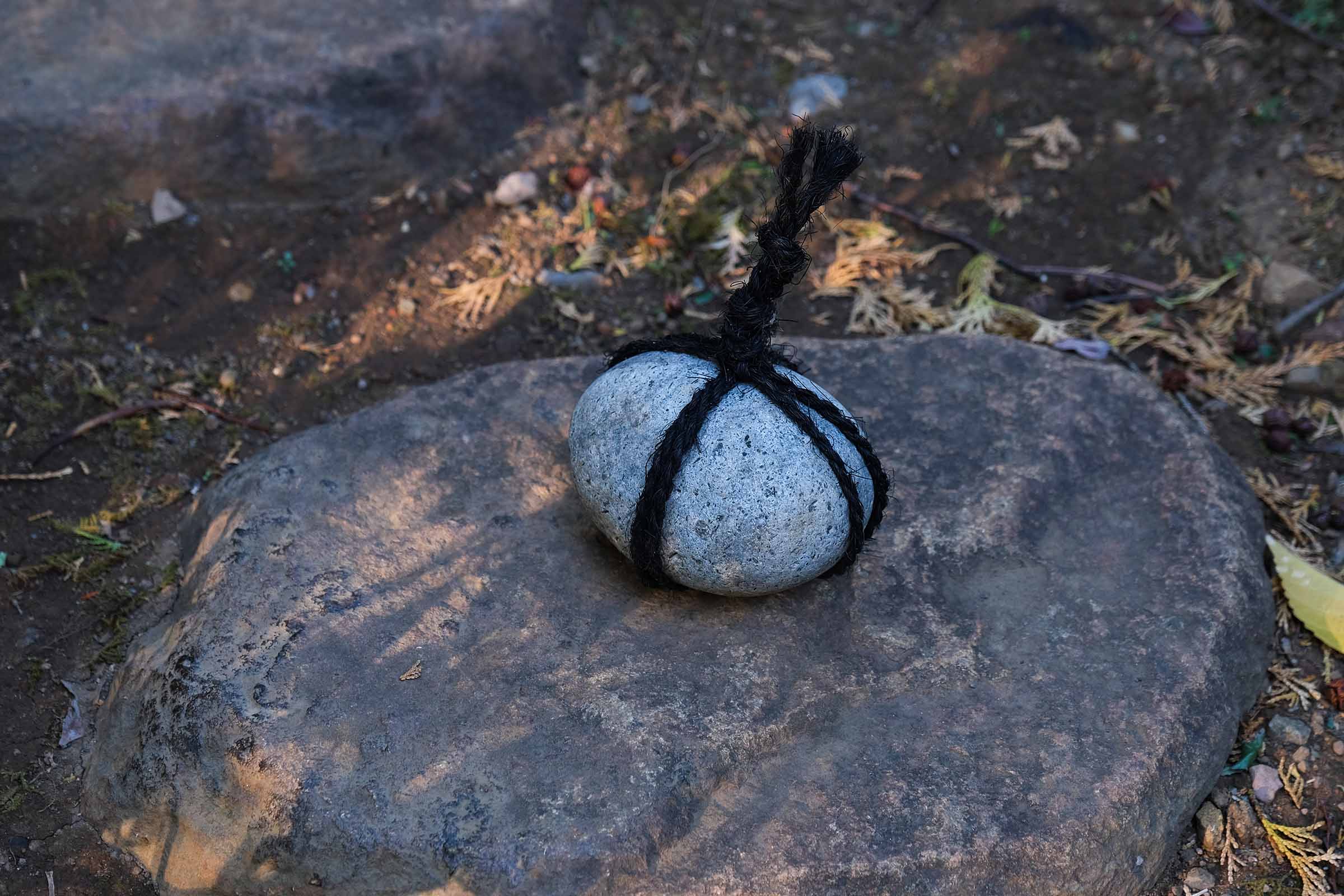
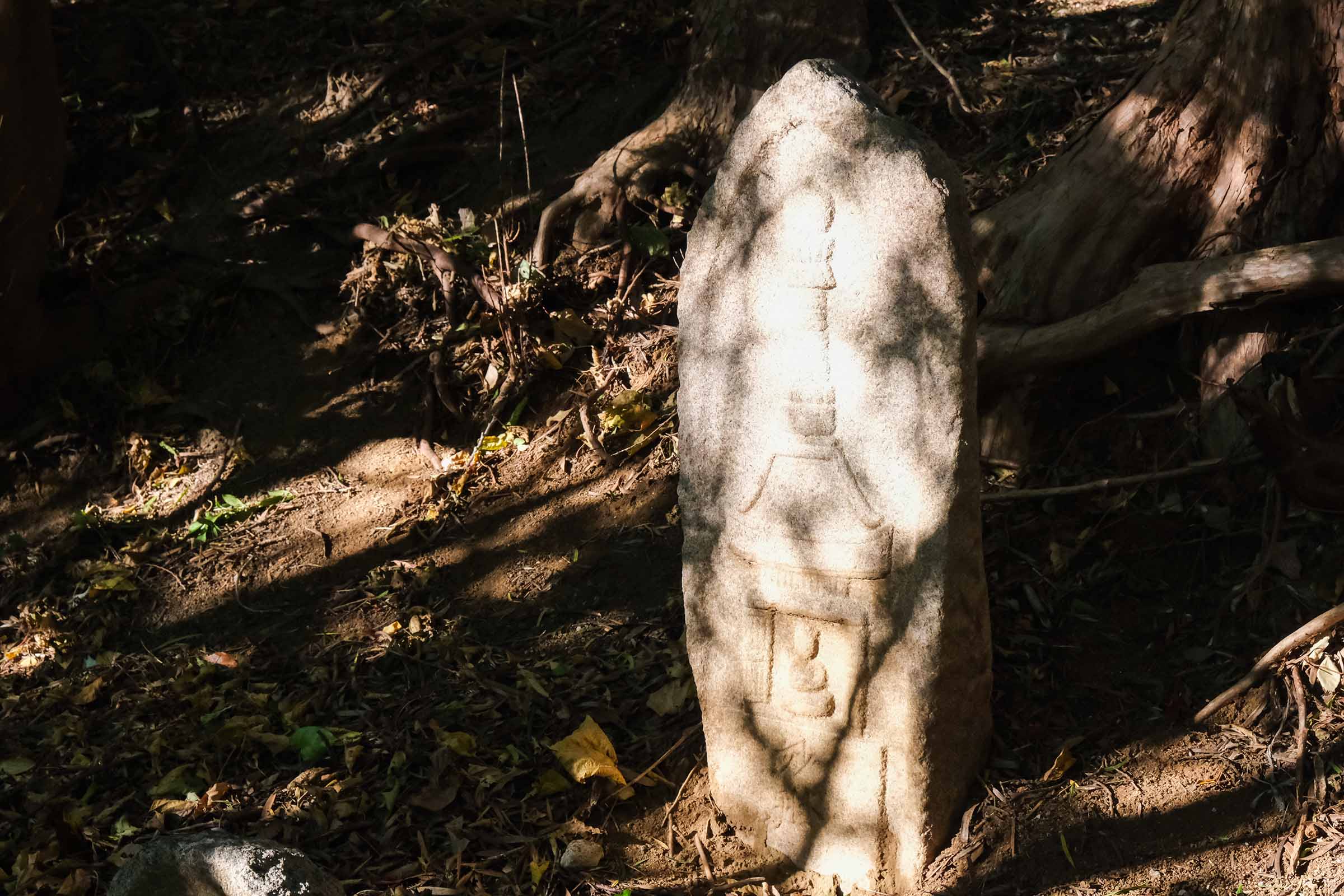
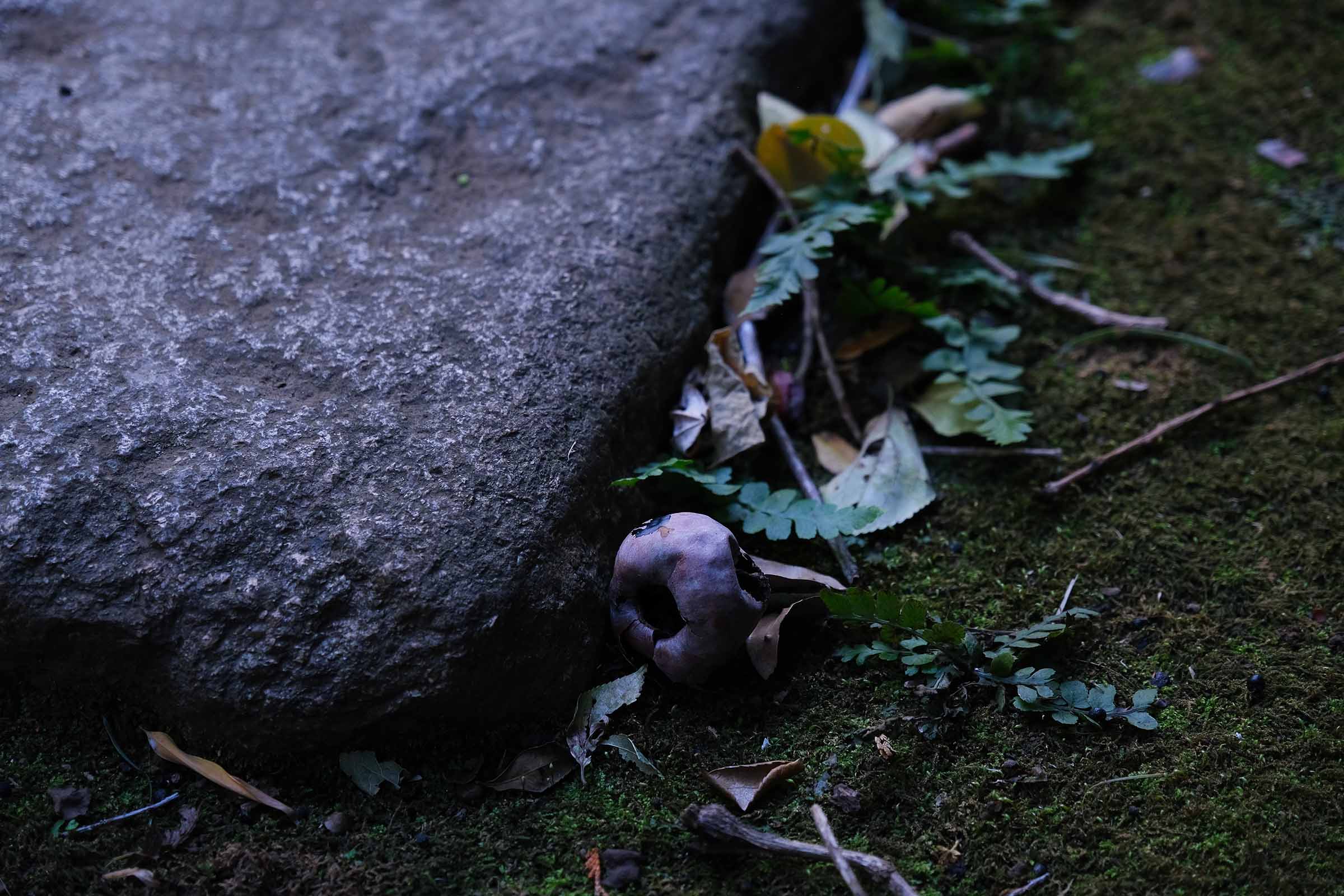
Ancient stones from Sugimoto’s collection are scattered all over the mountain. Photos by Gianfranco Chicco
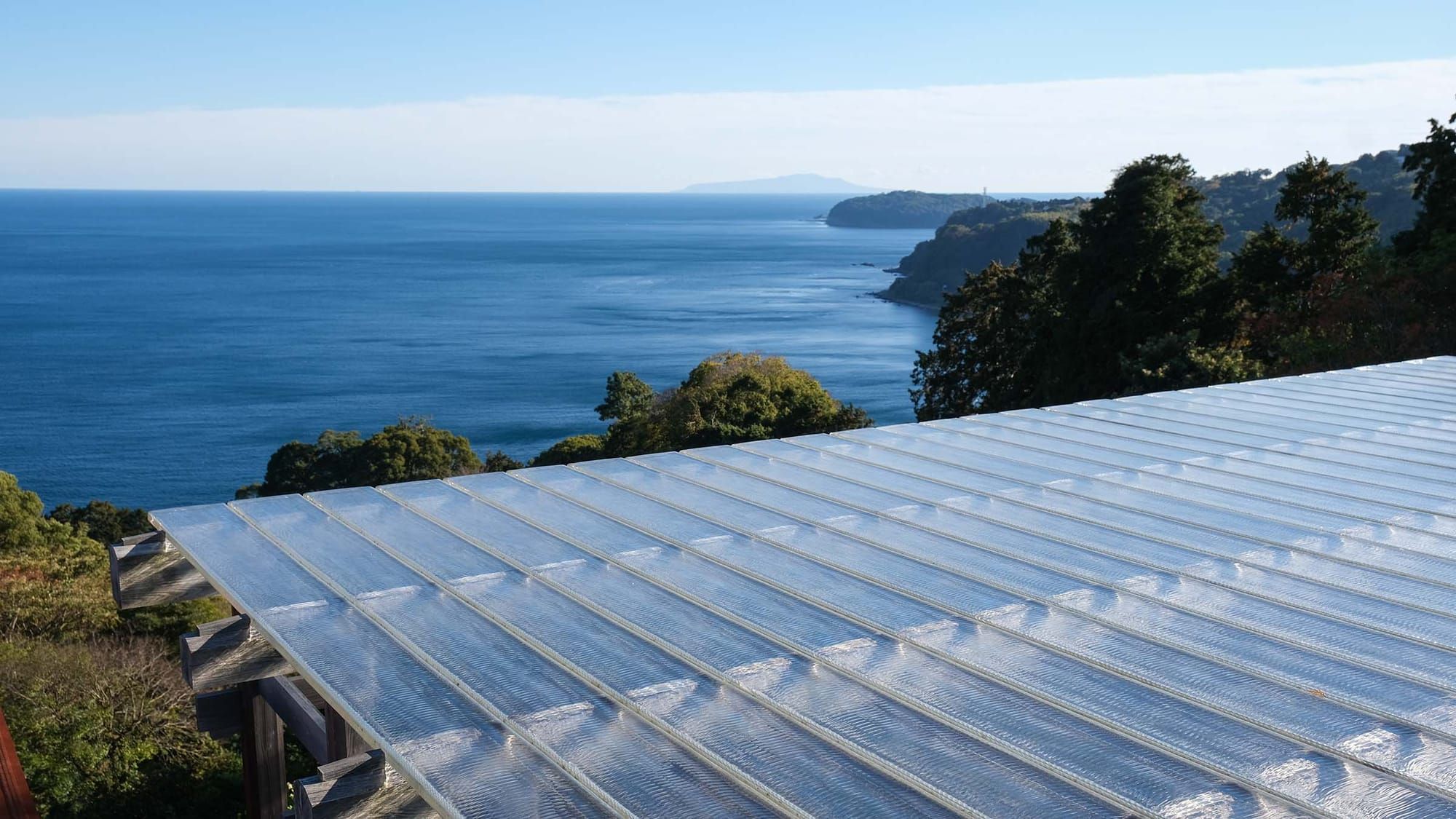
The mountain site is populated by bamboo and twenty different kinds of citrus trees. It also holds a tea house, a shrine, an old workshop, two open-air stages and galleries lined in glass that reflect the scenery, creating a sense of continuity between the natural and artificial landscape. Many of these have been strategically placed to be in harmony with the sunrise during the summer and winter solstices, and the spring and autumn equinoxes, with light travelling through long corridors and tunnels as the sun moves. Both stages are built to the dimensions of a noh stage. The one in the amphitheatre, above Sagami Bay, is optical glass that glows as light passes through it, appearing to hover above the sea.
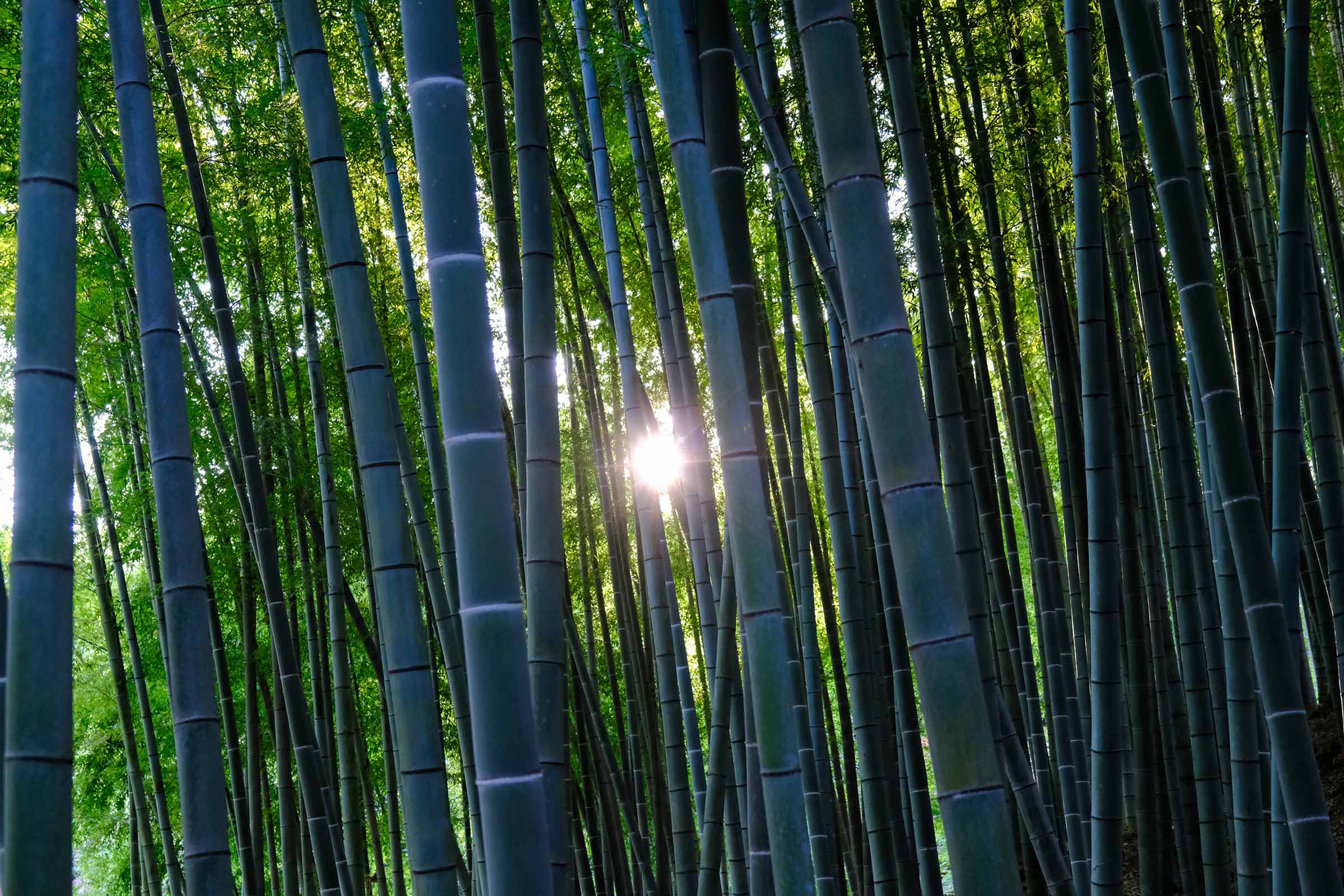
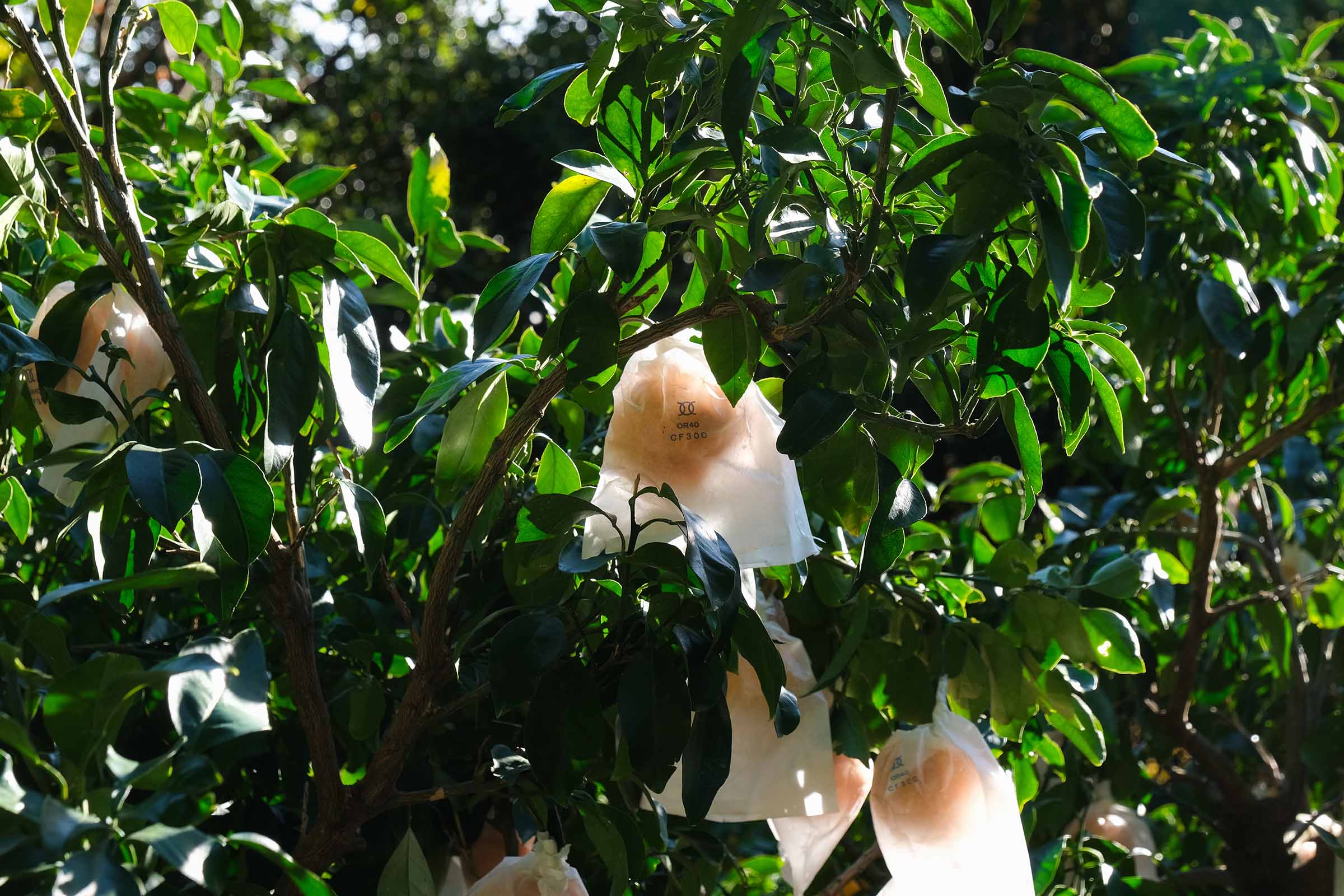
Dense bamboo groves. When I visit, the fruits, probably mikan (みかん, satsuma mandarin), are individually wrapped in plastic bags to protect them while they ripen. Photos by Gianfranco Chicco
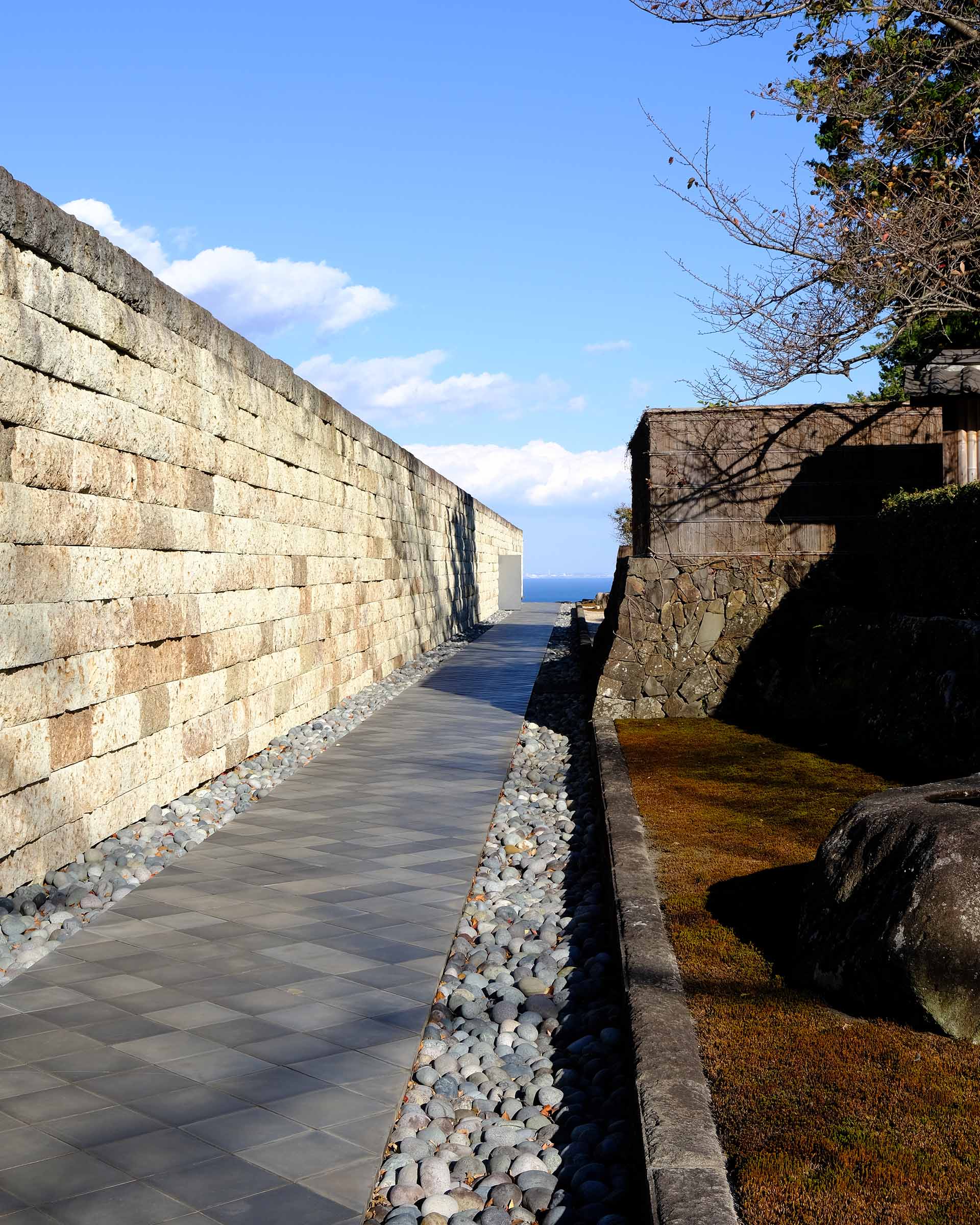
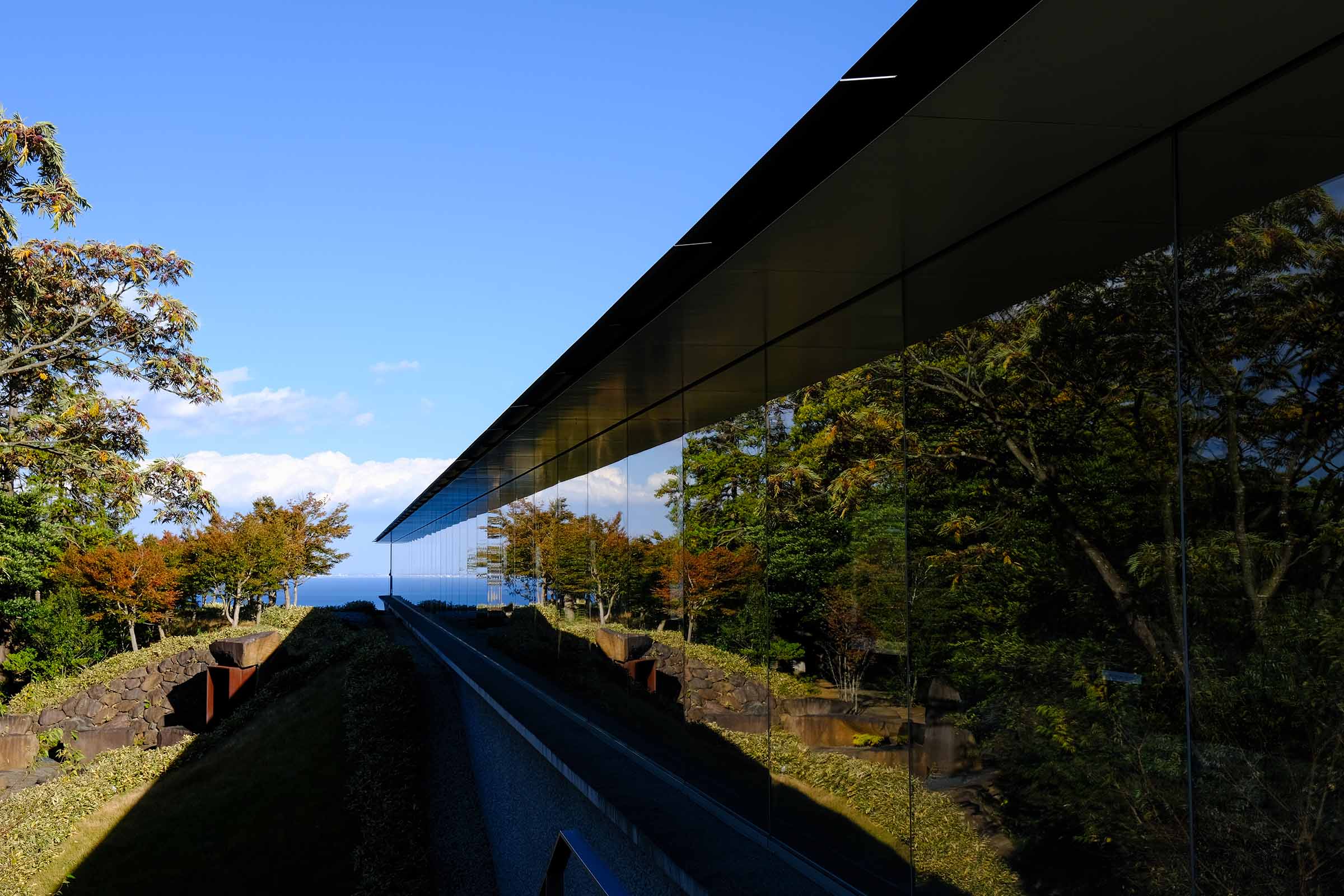
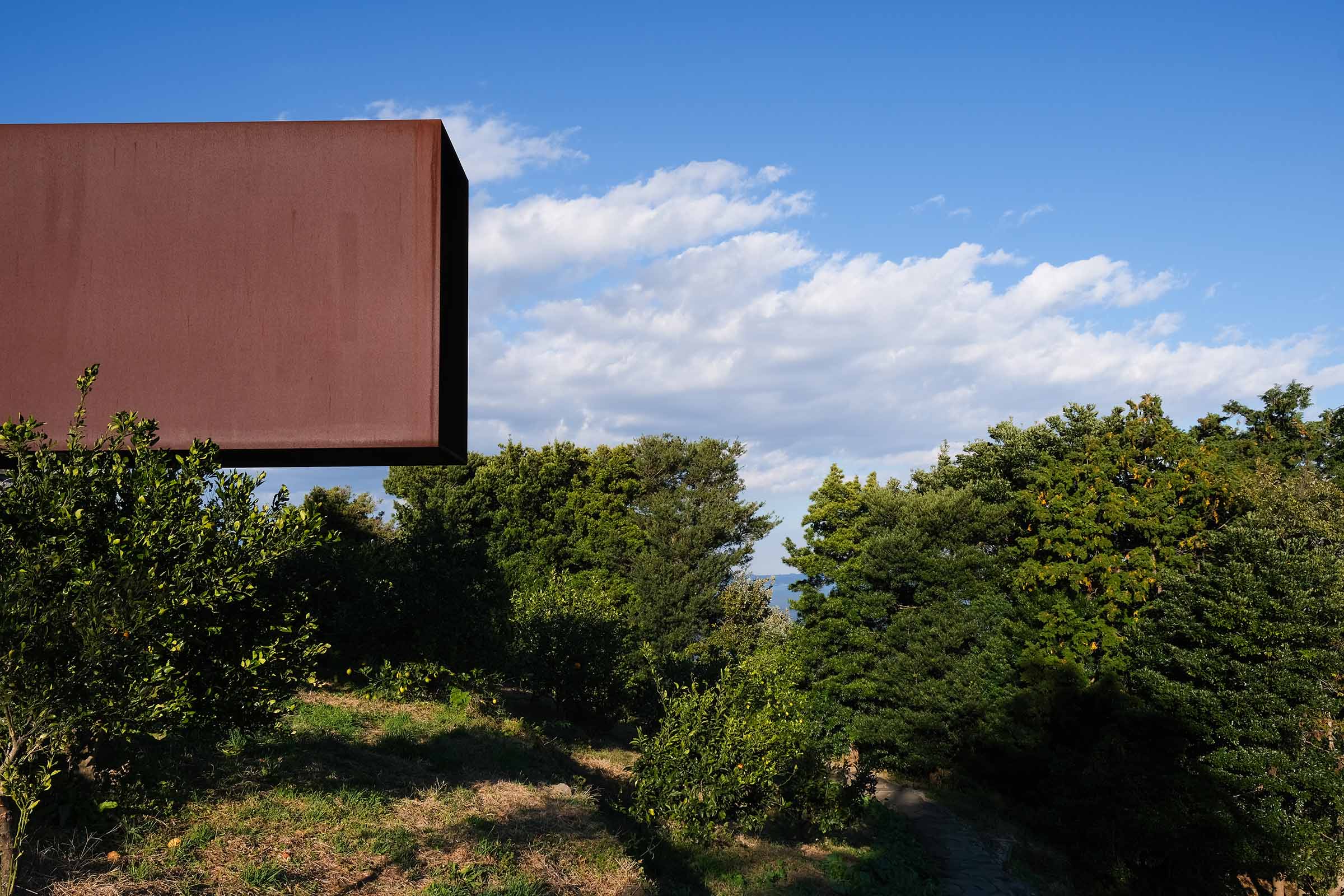
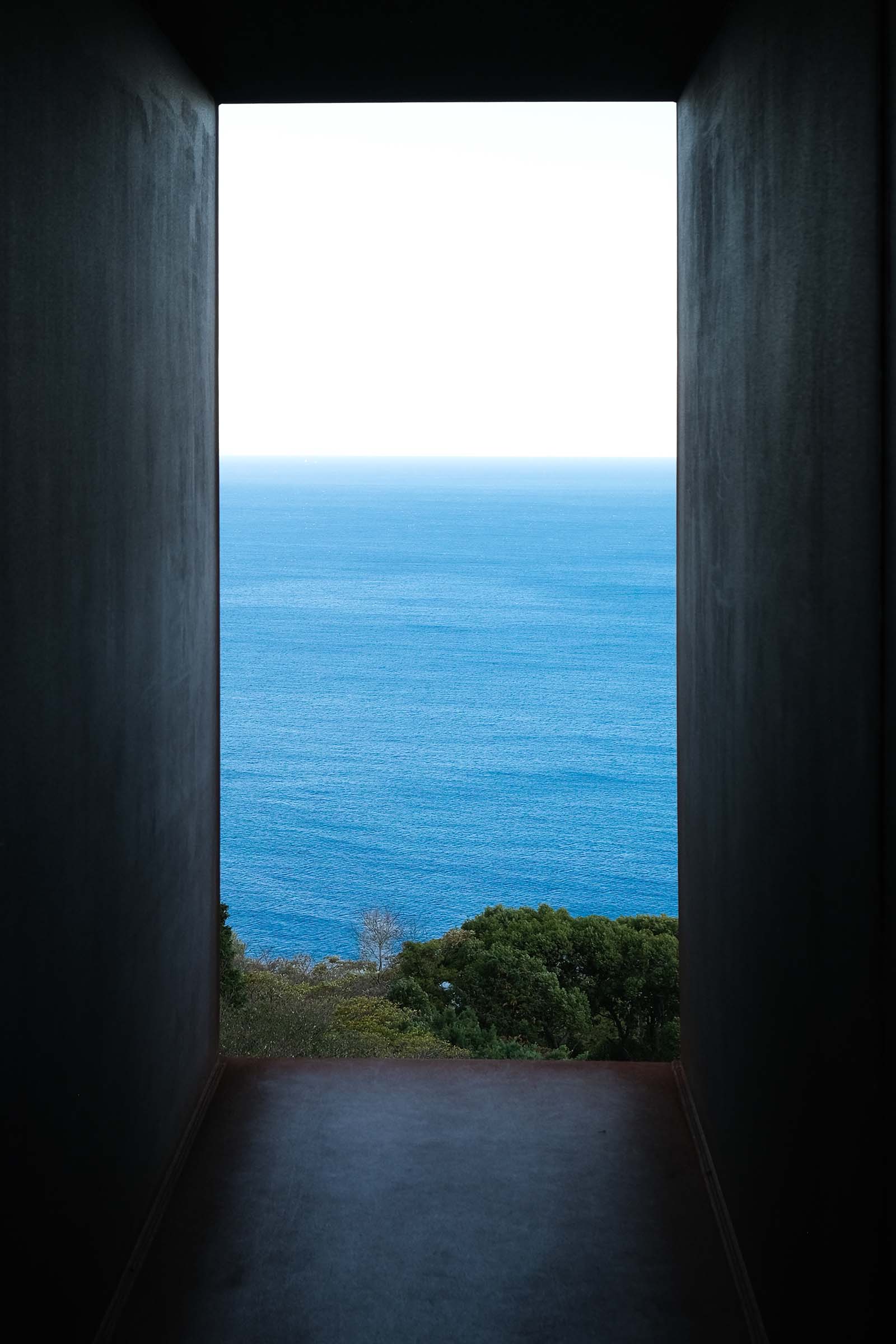
Summer Solstice Light-Worship 100-Meter Gallery and Winter Solstice Ligh-Worship Tunnel. Photos by Gianfranco Chicco
From scroll to hillside
Sugimoto considers Enoura his final project, and I have no doubt that it’s his masterpiece. Framing a scene, be it via a camera lens or by meticulous landscape design, is a craft in itself. But here the connection with craftsmanship evokes transcendence through space and time. Sugimoto writes that his goal in using traditional Japanese building styles and methods was not only to provide a tangible overview of Japan’s architectural history but also to “pass on craft skills that have been steamrolled by the cult of efficiency and to preserve them for future generations”.
Enoura Observatory is Hiroshi Sugimoto’s reinterpretation of the ‘Sakuteiki’. He calls it “one big performing space” where he stages dancers, theatre actors, conceptual artists and even the sun. A place to feel art and craftsmanship, not read about them.
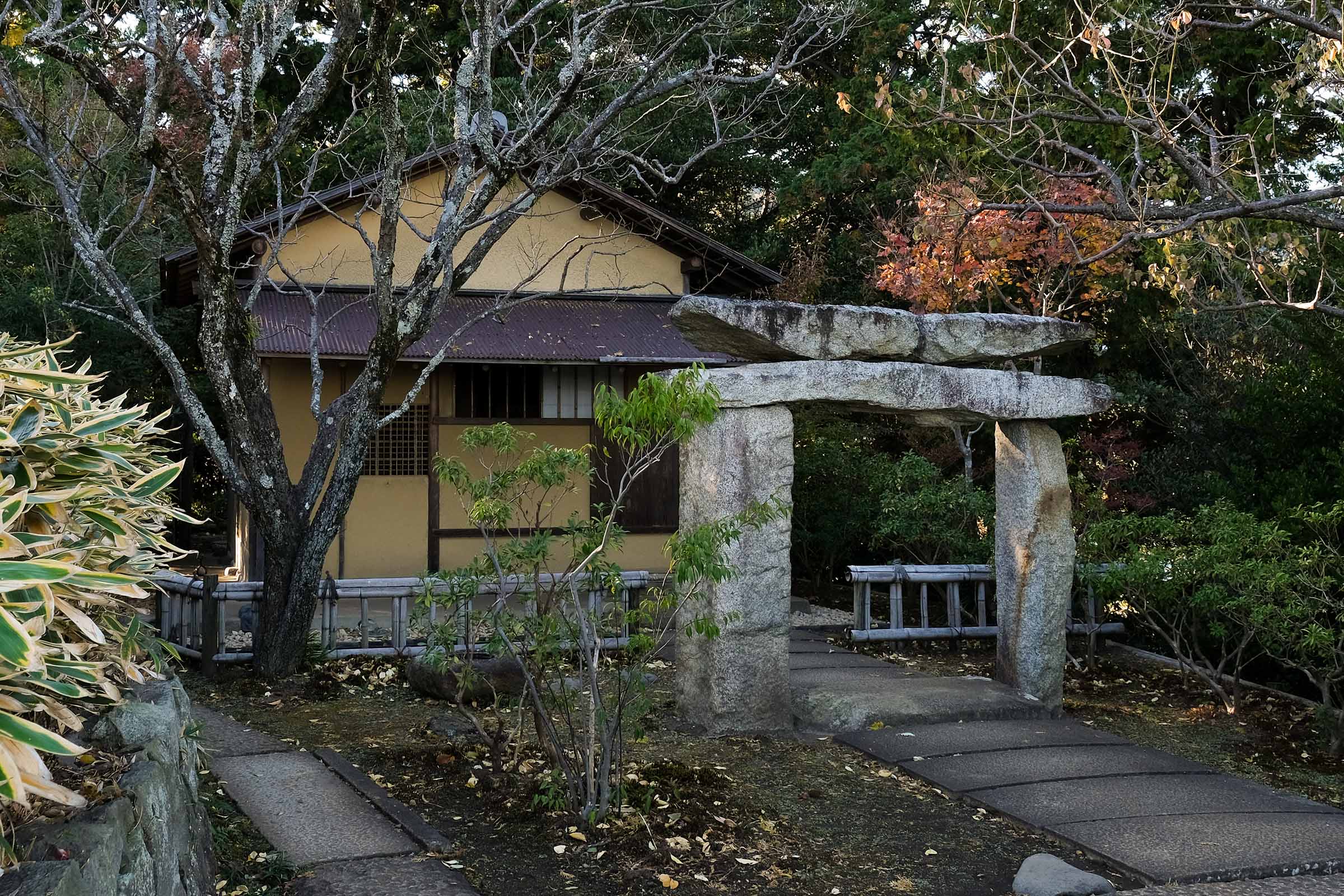
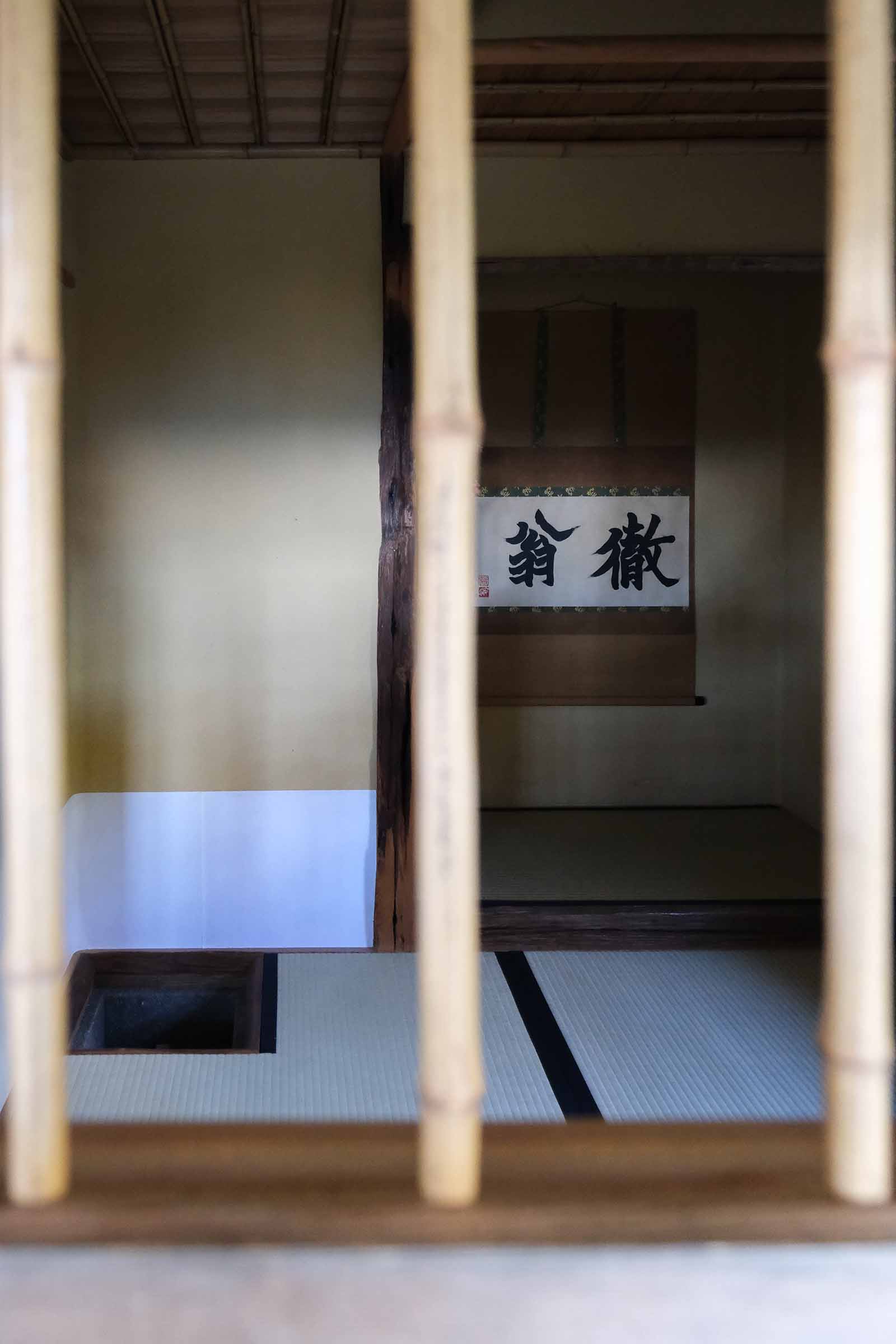
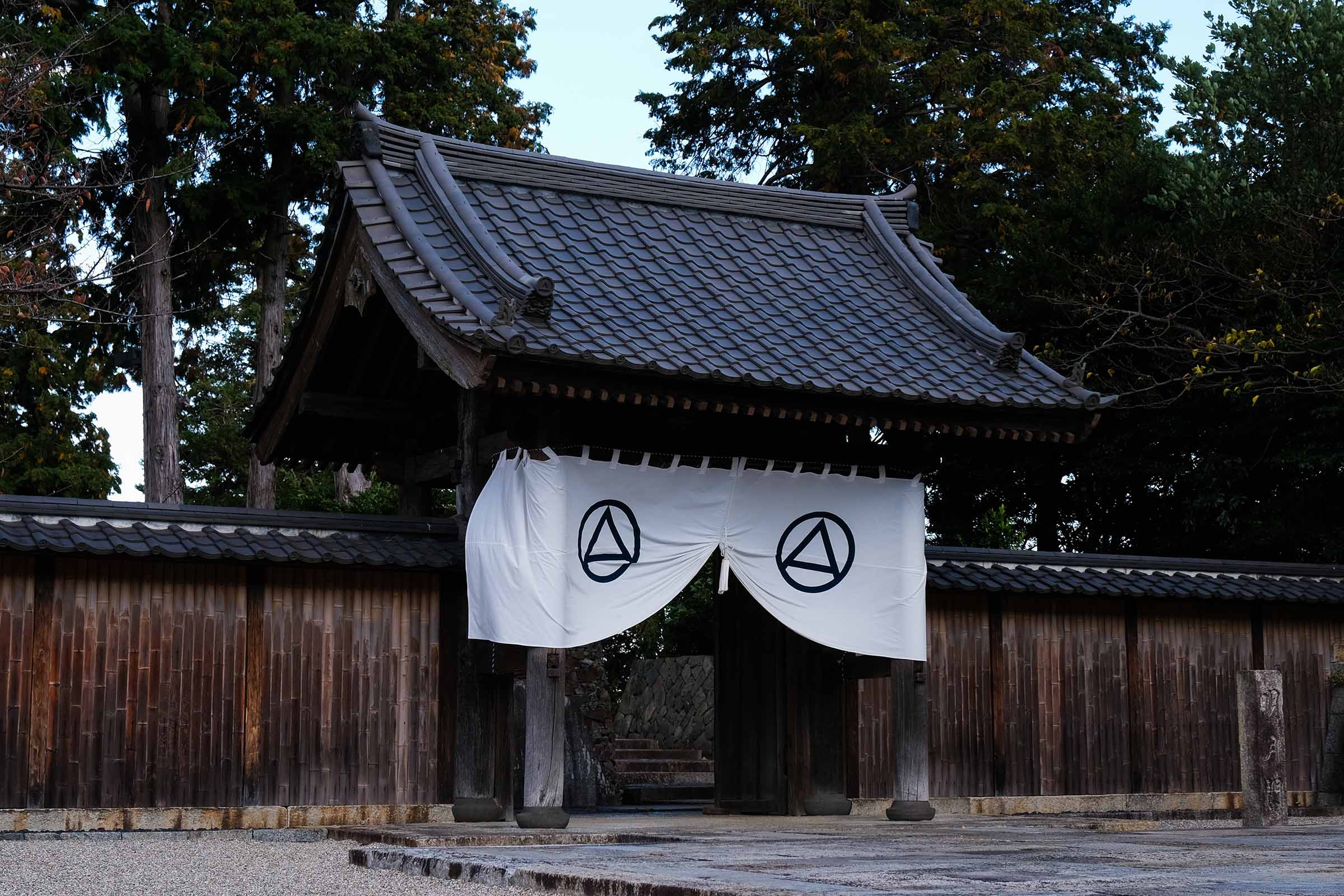
The Uchōten (雨聴天) Tea House has the exact dimensions of the Tai-an (待庵) Tea House designed by revered 16th-century tea master Sen no Rikyū. Its name—literally rain, listen, heaven—comes from the drumming sound of raindrops falling on the corrugated iron roof repurposed from a local barn. Photos by Gianfranco Chicco
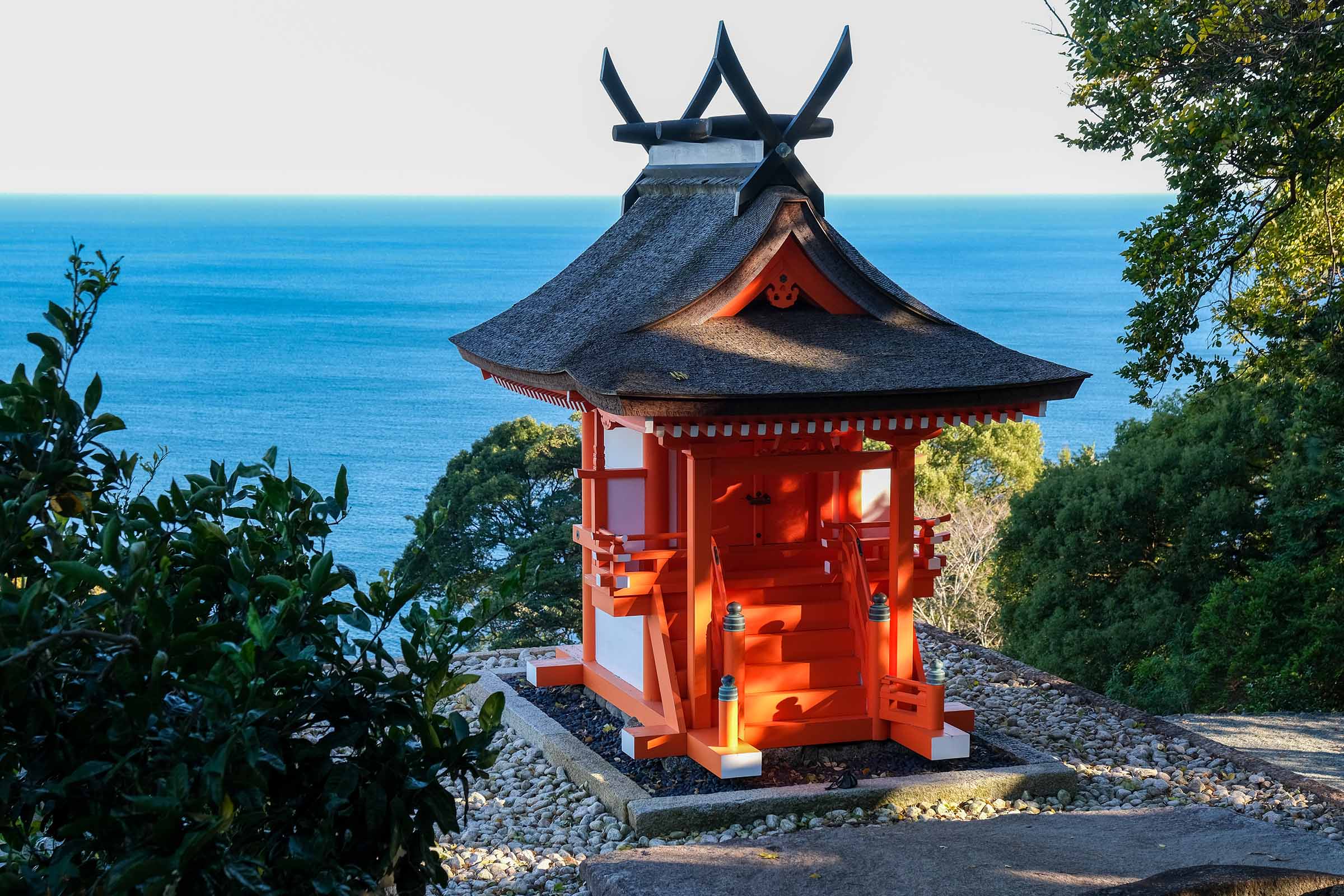

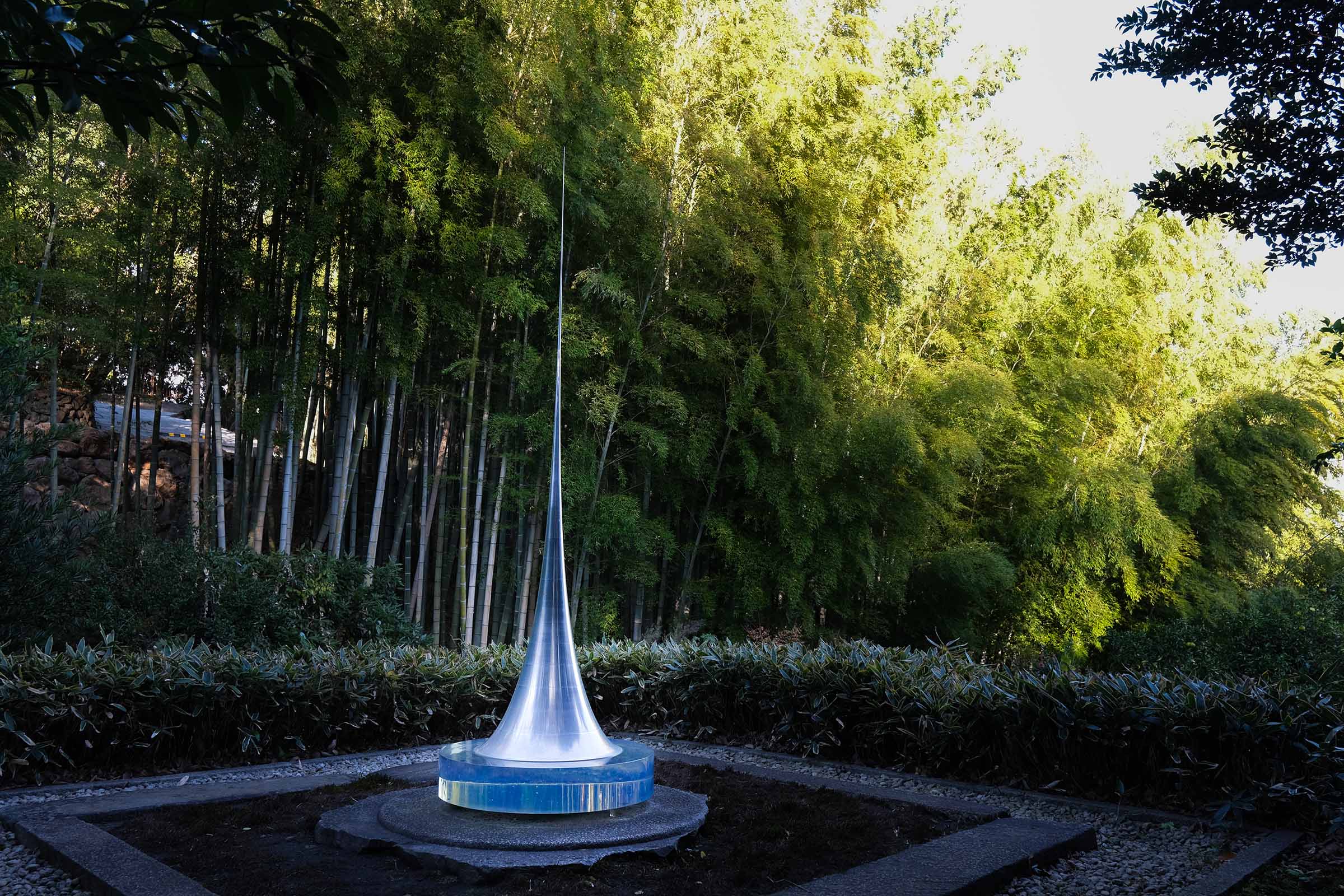
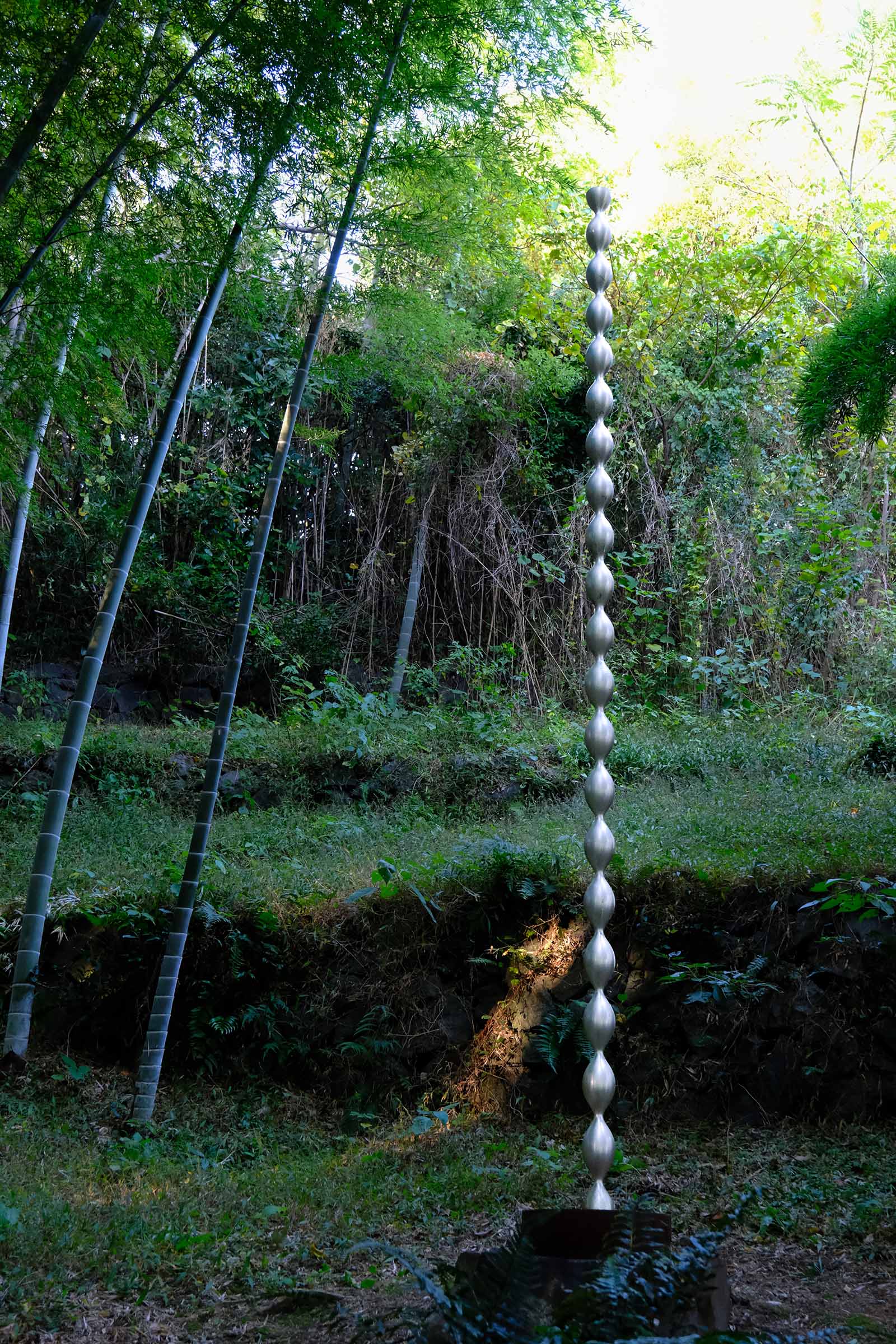
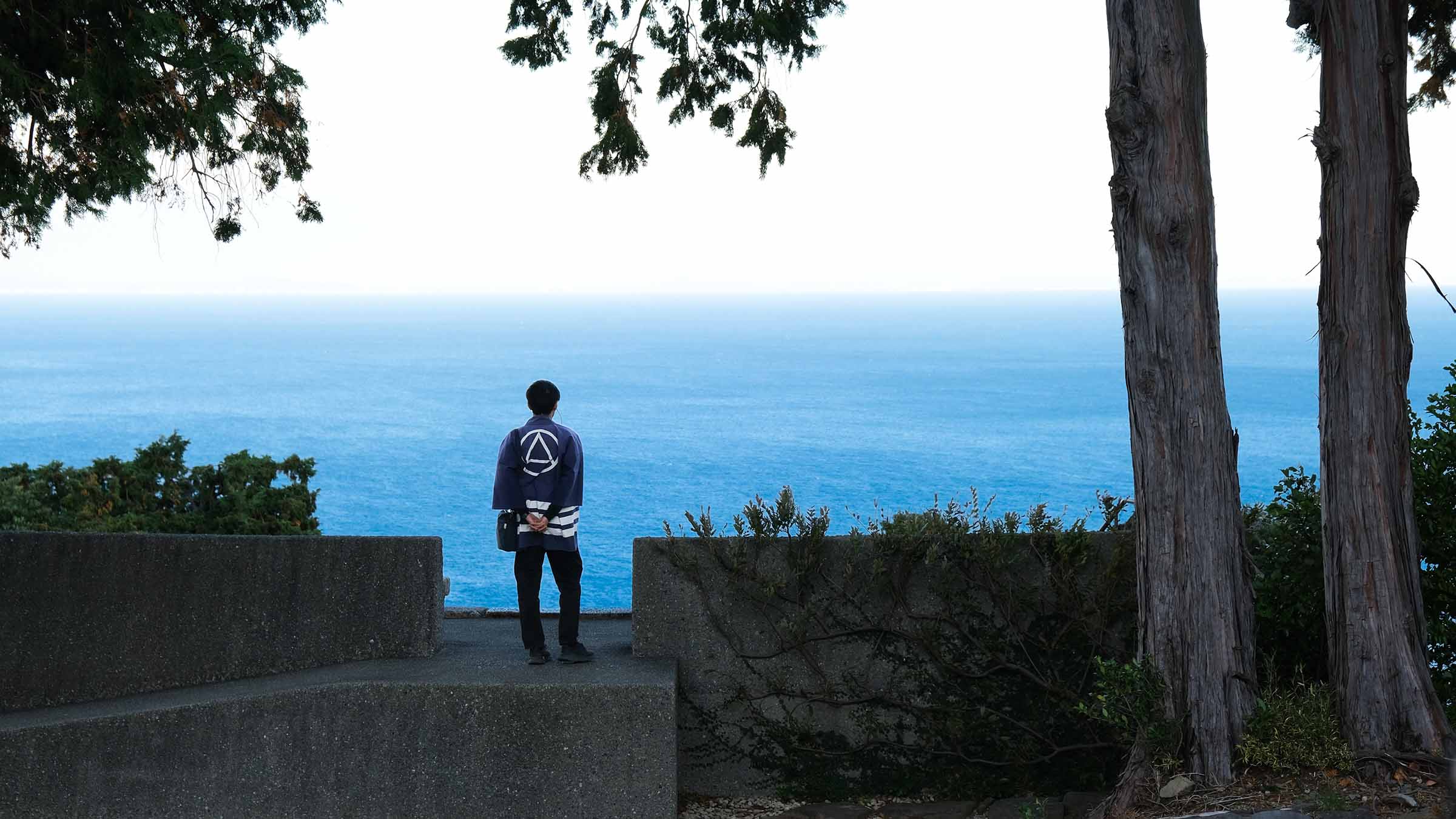
Kankitsuzan Kasuga Shrine, detail from the shed, sculptures visualising mathematical models and a member of staff. Photos by Gianfranco Chicco
Post scriptum
If you’re going to Japan, I wholeheartedly recommend visiting Enoura Observatory. Just the final part of the train ride from Tokyo with the idyllic views of Sagami Bay that inspired Sugimoto’s seascapes is worth the visit.
Recommended reading:
- ‘Enoura Observatory: Land of Distant Memory’, by Hiroshi Sugimoto
- ‘Sakuteiki: Visions of the Japanese Garden’, by Jirō Takei & Marc P. Keane
- Glass Tea House Mondrian
Like the content of The Craftsman? Share it with a friend! You can support my work by offering me a virtual coffee ☕️
つづく